
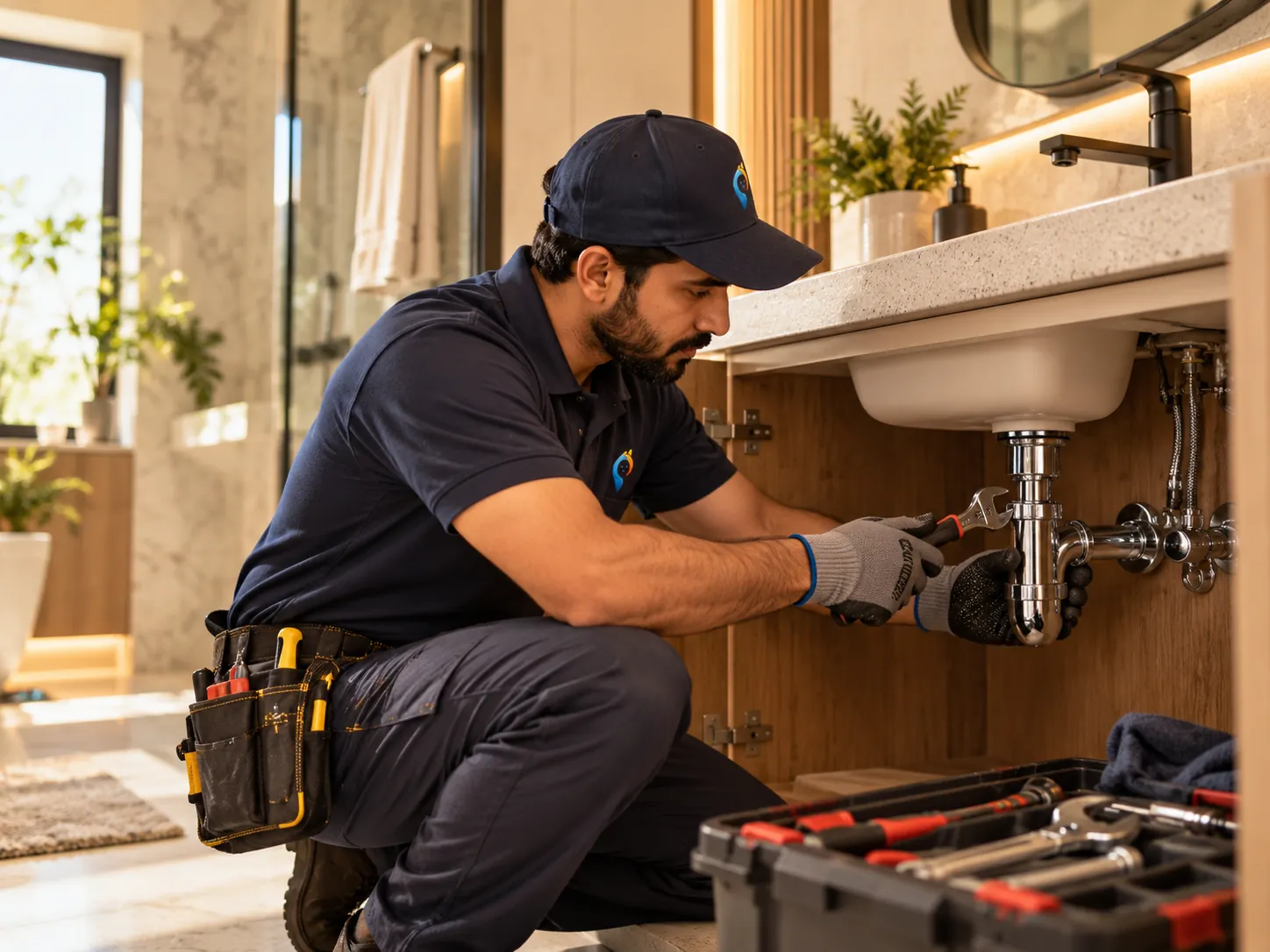
Identify the problem before requesting a plumber
Record whether the issue is a dripping tap, leaking supply pipe, running toilet, slow drain, damp wall or low water pressure. Note which fixtures are affected and whether the problem occurs only when a particular tap or appliance is used.
If water is actively escaping, locate the appropriate shut-off valve only if it is safe and familiar to use. Move vulnerable belongings away from pooled water and avoid using electrical equipment in wet areas.
Useful details for a plumbing service request
Share the room, fixture type, approximate pipe location and when symptoms first appeared. Tell the plumber whether the home uses a storage tank, pressure pump or direct water supply if known.
Photographs of a visible leak or faucet can be useful, but do not break tiles, dismantle sanitary fixtures or open sealed pipework merely to prepare a request.
Scope, materials and follow-up questions
Clarify whether a quotation covers inspection, replacement parts, sealing, labour and any finishing work such as retiling. Ask how the plumber will test the repaired fixture before leaving.
For blocked drains, ask about possible causes and safe maintenance habits rather than assuming that repeated chemical cleaners are the answer. Never mix drain-cleaning chemicals.
Preventing repeat water damage
After a repair, watch the affected area for new dampness and check accessible joints for drips. Persistent musty smells or damp walls may justify further inspection instead of repeated surface painting.
Example: communicating a recurring leak
“Water appears below the kitchen sink after the tap has been running for a few minutes. The visible pipe joint looks damp; the floor is dry when the tap is off. I have a safe exterior photograph and can explain where the shut-off valve is.” Avoid dismantling plumbing simply to identify a fault. If water reaches electrical equipment, keep clear and seek appropriate professional help.
If the whole building has weak flow, also note the roof tank and pressure-pump setup; our water tank and pump checklist can help structure that part of the request. The free request brief template offers a printable structure for sharing this information.
Plumbing problems: questions to clarify before requesting help
Why is water pressure low in one tap but normal elsewhere?
A problem limited to one outlet may differ from low flow throughout a home. Note which taps are affected, whether the issue is constant and whether the property uses a roof tank or pressure pump. A plumber can distinguish fixture, supply and pump-related causes after inspection.
What should I do when a pipe is leaking?
If it is safe and familiar, use the appropriate water shut-off valve, protect belongings and avoid electrical equipment near water. Record where water appears and whether the leak stops when a particular fixture is unused. Do not break walls or disconnect sealed fittings to diagnose the problem.
What information helps with a blocked drain?
Explain which fixture drains slowly or backs up, when the symptoms started and whether other drains are affected. Do not mix drain chemicals, and tell the professional about any product already used so they can plan work safely.
Our water tank and pump guide covers related household supply concerns. Use the service brief checklist to prepare a request. Athoo is currently pre-launch and does not offer live plumbing bookings through the website.
Frequently asked questions
Should I photograph a leak before the plumber arrives?
Yes, if you can do so safely. A clear image of the visible leak and surrounding fixture can help explain the issue.
Is low water pressure always a plumbing leak?
No. Pressure problems can have several causes, including supply or equipment issues. Proper inspection is needed.
Pre-launch notice: Athoo is a Pakistan-first home-services app in development. These are informational planning tips, not a live service listing, a confirmed local provider directory or a booking guarantee. Emergency situations require appropriate qualified help.