
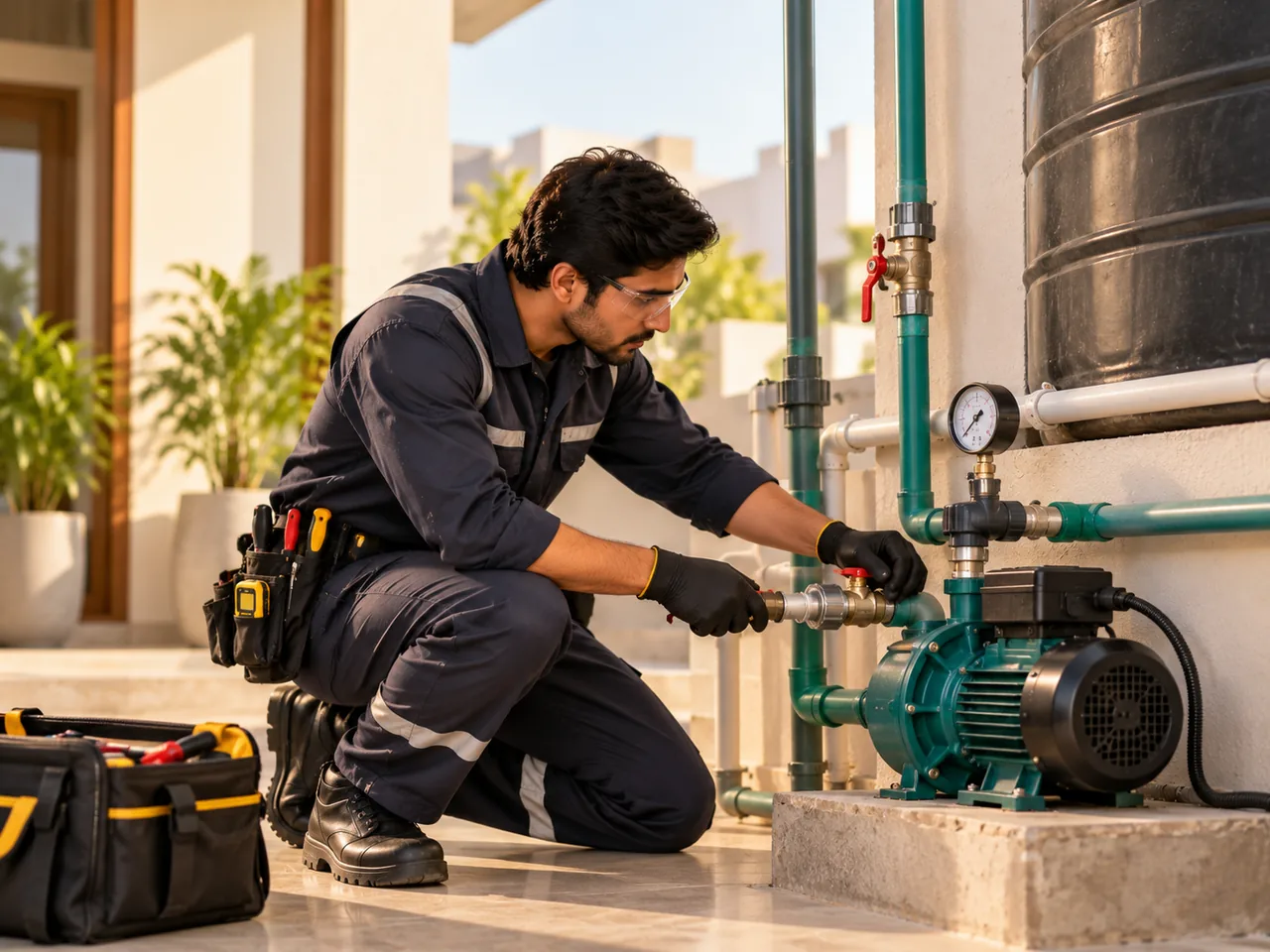
Common situations and requests
Low or intermittent pressure
Note affected taps, floor levels, timing and whether cold/hot supply differs.
Pump running without expected flow
Record unusual noise, cycling and when the issue began, without opening equipment.
Tank overflow or float issue
Document overflow timing and any visible external leaks or unsafe water contact.
Tank cleanliness concerns
Look for odour, unusual colour, sediment or an overdue inspection schedule.
What to clarify with a professional
Separate supply from equipment
A professional may distinguish supply, piping, pump, valves and tank issues.
Electrical and plumbing assessment
Pump motors, controls and wet areas require qualified handling.
Cleaning method and water safety
Agree on isolation, cleaning approach, waste handling and safe return-to-service requirements.
Quote detail
Ask whether parts, access, water testing, disposal and follow-up checks are included.
Track pressure patterns
Ask which floors and outlets the professional will test, whether performance changes during peak-use hours, and what evidence supports a pump versus pipework diagnosis.
Prepare an accurate request
Record whether the property uses an overhead or underground tank, municipal supply, bore, booster pump or pressure switch. Note which taps or floors have weak flow and the time of day it occurs. If safely visible, capture indicator lights or external equipment labels without opening electrical housings or entering tanks.
Costs and quotation factors
For tank and pump work, request separate pricing for inspection, electrical testing by a qualified person, plumbing fittings, pump or float-switch replacement, cleaning and disinfection where applicable, safe access and water-quality checks. Clarify whether any proposed replacement includes matching specifications and warranty.
Safety and limitations
Never enter a water tank or confined space yourself. Do not touch wet electrical equipment or operate a pump that is overheating, making unusual noise or running dry. If stored water appears contaminated, avoid assuming it is safe to drink; seek appropriate local water-quality guidance.
Frequently asked questions
Why is water pressure low in only part of a home?
Possible causes include a local fitting restriction, pipework, valves or pump-related issues. Note which taps are affected and ask a qualified technician for diagnosis.
What should I ask before pump or tank work?
Clarify the inspection findings, electrical isolation, component suitability, tank hygiene, parts, labour and warranty terms. Avoid electrical work near water.
Related practical guides
The water-tank-and-pump guide explains observations that help distinguish low supply, blocked piping, tank level and pump faults. Plumbing and electrical guides may be relevant where multiple systems overlap.
About Athoo
Athoo is building a Pakistan-focused home-services marketplace. This page helps users understand the service category and prepare informed questions; it does not offer an appointment, fixed price or confirmed city coverage.
Athoo is in development. This page provides service-planning information; it does not confirm bookings, provider availability, prices or emergency response.